
RPD® Technology
Rapid Plasma Deposition® is Norsk Titanium's patented evolution of wire-directed energy deposition. It uses Ti-6Al-4V titanium wire, a plasma arc, an inert argon atmosphere, and sophisticated process control to produce near-net-shape structural components for demanding aerospace, defense, and industrial applications.
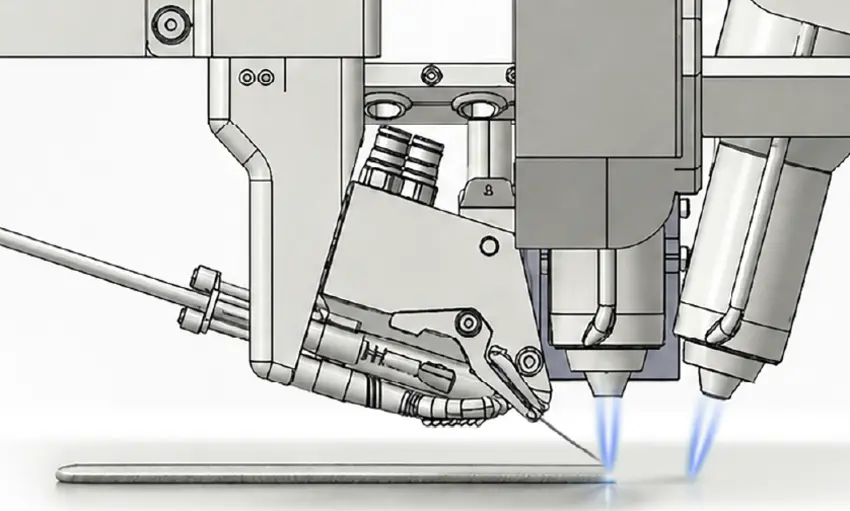
An industrialized process for near-net-shape components.
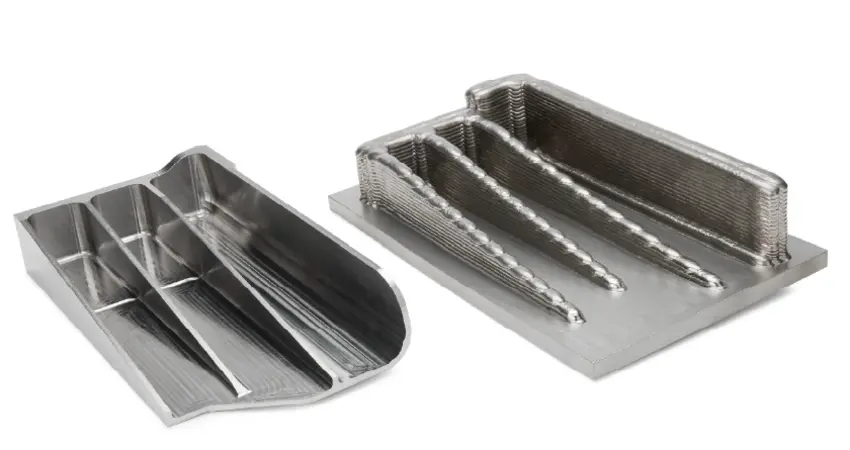
RPD® builds titanium structures layer by layer from wire feedstock. Inside a fully inert argon environment, a plasma arc melts the wire and deposits material along a defined toolpath, with the process monitored more than 600 times per second for consistency. The resulting preform is then machined and inspected to meet finished-component requirements.
This is not additive manufacturing as a design novelty. It is a production process for structural titanium deposited at 5–10 kg/hr, where material efficiency, lead-time, and repeatability can change the business case.
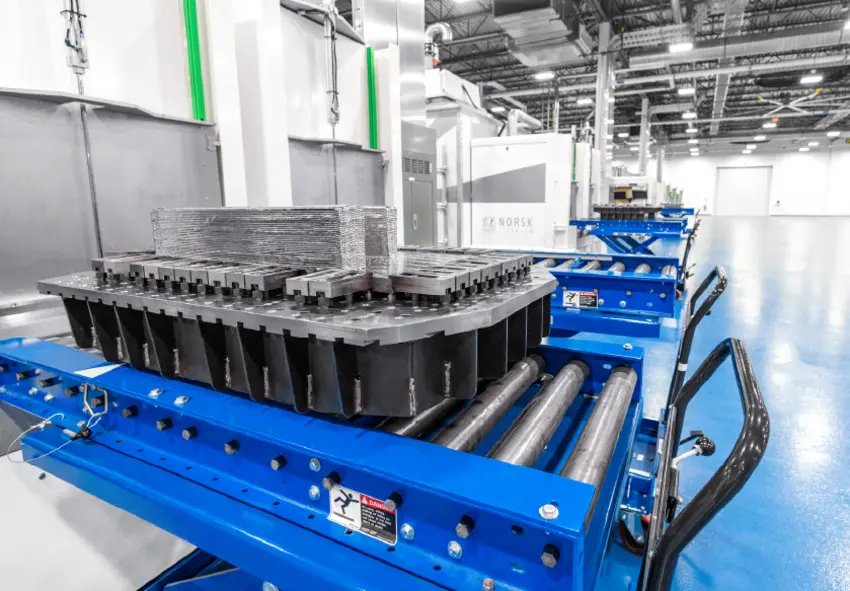
Controlled deposition from start to finish.
01 Part Selection
Norsk Titanium works with customers to identify components where RPD® can create the strongest economic and supply-chain advantage.
02 Preform Design
The part is engineered as a near-net-shape preform, balancing printability and final-part requirements using RPD Builder® software.
03 RPD® Deposition
Titanium wire is deposited in a controlled argon environment using plasma-arc energy and qualified production process.
04 Post-Processing
The preform moves through qualified downstream processes, including heat treatment, inspection, and non-destructive evaluation as required.
05 Finish Machining
The near-net-shape preform is machined to final geometry using established manufacturing workflows.
06 Serial Production
Once qualified, the part can move into recurring supply across Norsk Titanium's installed production base.
Purpose-built for industrial-scale production.
The MERKE IV® is Norsk Titanium's fourth-generation (Gen 4) RPD® production machine, engineered to manufacture structural titanium components with consistent process control, large-batch capability, and machine-to-machine equivalency — so the same qualified program can run on any machine with less than 1% fallout.
With installed production assets across three facilities in the United States and Norway, Norsk Titanium gives customers a scalable path for qualified titanium production across aerospace, defense, and industrial markets.
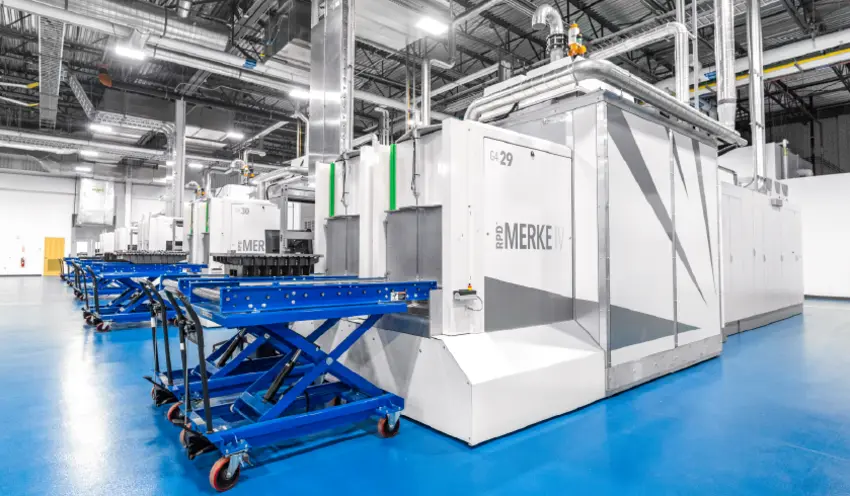

35 RPD® machines

650 MT annual print capacity

Three facilities across the U.S. and Norway
Process control is the product.
For structural titanium, the value of additive manufacturing is not simply the ability to print a shape. The value comes from controlling the process well enough to produce the same material quality again and again.
RPD® runs as a fixed process: deposition parameters are verified for each part program, then locked under configuration control, with regular subsystem calibration removing machine-to-machine variation. Combined with established material specifications and the qualification discipline aerospace and defense customers demand, this is what lets a verified program produce the same part on any qualified machine.
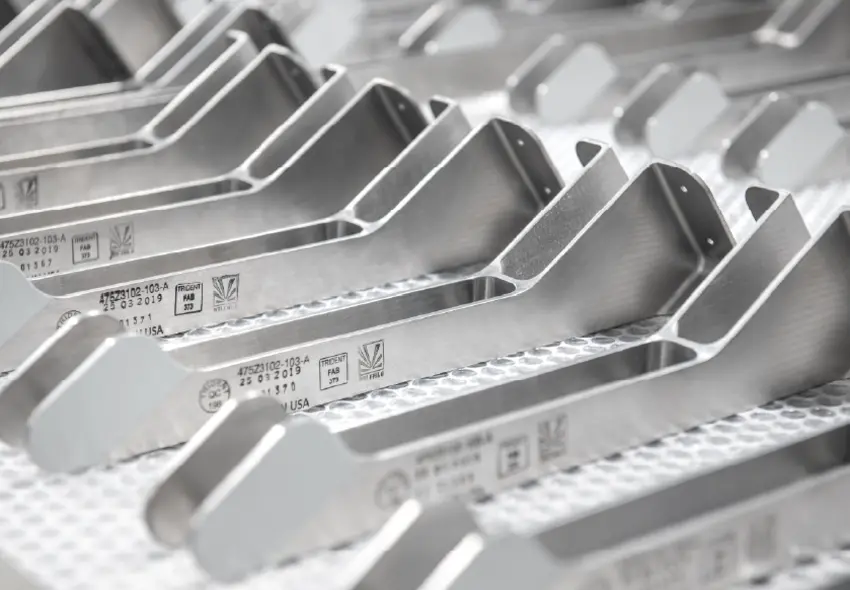
Titanium today, a growing alloy range beyond it.
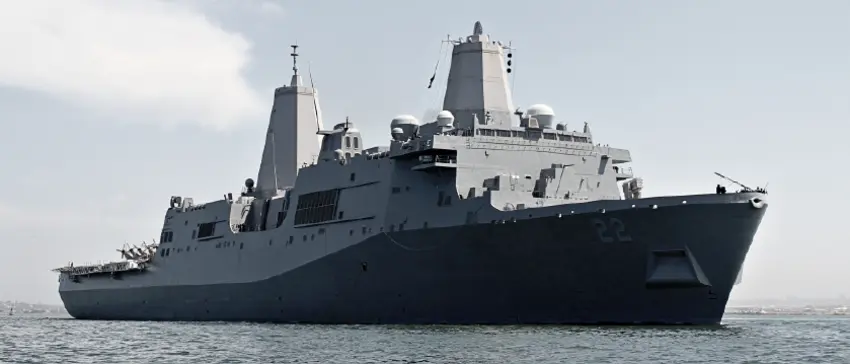
Ti-6Al-4V is where RPD® established its credibility — MMPDS-published, with 3,000+ parts delivered. But the process was never limited to a single metal. Its tightly controlled, disciplined deposition extends to a growing range of weldable alloys, including Inconel 625 and 718, commercially pure titanium, and copper-nickel — bringing the same speed, material efficiency, and supply-chain advantages to aerospace, defense, naval, and industrial applications.
RPD® wins when the part fit is right.
RPD® is strongest where the economics of conventional forging or machining are under pressure: high buy-to-fly ratios, long lead times, costly tooling, constrained supply, and recurring demand for structural titanium parts.
The best-fit components are typically medium-to-large structural parts (roughly 100–150 kg on the G4B envelope, up to 200 kg on the G4L) with simple-to-moderate geometry, a buy-to-fly ratio of 8–10:1 or higher, and a clear path to qualification or production adoption.
Ready to put RPD® to work in your supply chain?
Whether you are evaluating a new titanium structure, looking for an alternative to forging, or working to improve production resilience, Norsk Titanium can help determine where RPD® fits, and can move a strong-fit part from candidate to qualified production in about six months.
Request a Meeting